A collapsing fence is a major liability for any commercial property manager. Here in Jacksonville, the mix of high humidity and constant pests means a failing post can quickly become a safety hazard. You need to know exactly what is eating your wood to stop the structural damage. If you need immediate help, contact Masters Fence at (904) 510-6540 for expert fence repair.
What Causes Wood Rot in Florida Fences?
Wood rot is a fungal decay that thrives in constant moisture. Jacksonville's 90-degree summers and heavy rainfall create the perfect breeding ground for these fungi. Once water penetrates the wood fibers, the fungus breaks down the cellulose. This leaves your commercial fence soft, crumbly, and structurally weak.
Properties near the St. Johns River face even higher risks due to the constant moisture in the air. We see three main types of rot in our area: brown rot, white rot, and soft rot. Brown rot causes the wood to shrink and break into cube-like pieces. White rot gives the timber a bleached or yellowish appearance. Soft rot attacks wood that touches the damp soil directly.
You can easily spot rot by its musty, earthy smell and dark discoloration. The damage usually starts at the base of the posts where drainage is poor. Ignoring this moisture problem will lead to complete structural failure. That makes immediate fence repair in Jacksonville, Florida, an absolute necessity for property managers.
How Do Termites Destroy Commercial Fences?
Termites are social insects that feed directly on the cellulose inside your wood fence. Subterranean and drywood termites are extremely common in Northeast Florida. They burrow into the posts and pickets, hollowing them out from the inside. They leave the exterior looking completely normal.
Our technicians typically find that property managers miss the early warning signs. Termites build distinct mud tubes along the base of your fence to travel safely from the soil. You might also notice small piles of wood pellets, called frass, near the bottom of the panels. If you see discarded insect wings after a spring rain, you likely have an active swarm.
These pests work 24 hours a day. They can compromise a solid wood post in just a few months. A termite-infested fence cannot secure your commercial property.
Wood Rot vs. Termite Damage: How Can You Tell the Difference?
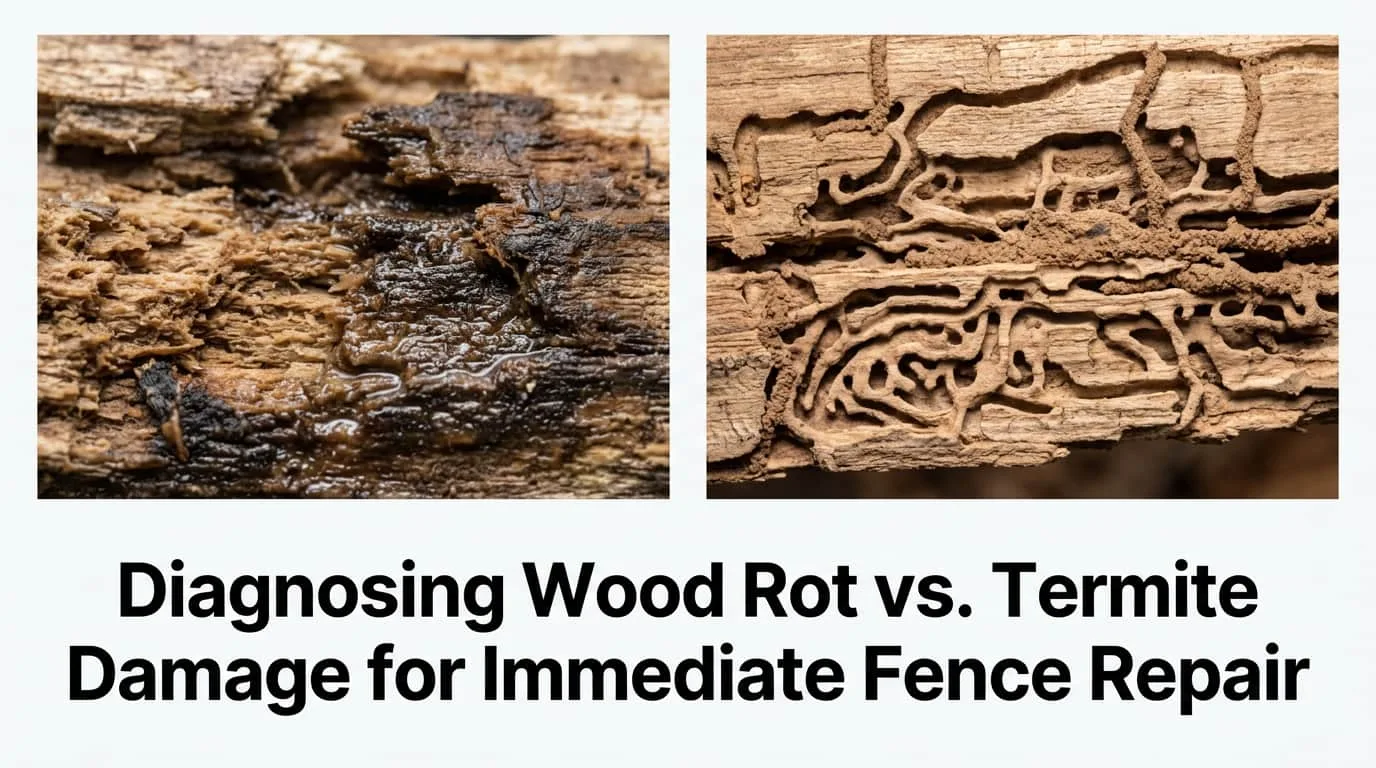
You can tell the difference by looking closely at the damage pattern. Wood rot causes the timber to look dark, crumbly, and spongy to the touch. Termite damage leaves the wood hollow-sounding, with distinct tunnels or mud tubes visible near the base of the posts.
Take a screwdriver and gently press it into the damaged area. If the tool sinks easily into wet, spongy fibers, you have wood rot. If the wood breaks away to reveal tiny, clean tunnels and live insects, you are dealing with termites.
Both issues weaken the structural integrity of your perimeter. Over 40% of the commercial fences we inspect in older neighborhoods like Riverside show signs of both problems simultaneously. Understanding exactly what you are dealing with dictates your next steps.
What Are the Best Strategies for Commercial Fence Repair?
The best repair strategy depends on the severity of the damage. Minor rot requires removing the soft wood and applying a hardener. Severe termite damage or deep rot means replacing entire posts or panels. Quick action prevents the damage from spreading to the rest of the property.
For minor surface rot, applying a waterproof sealant can extend the life of the wood. However, structural damage requires professional replacement. Basic fence repair in Jacksonville, Florida, typically costs between $200 and $500 for a few minor fixes. Replacing a heavily infested 100-foot commercial stretch in a busy area like San Marco can exceed $3,000.
If you discover termites, do not disturb the mud tubes. Call a pest control specialist immediately for a liquid treatment or bait system. Once the colony is eliminated, you can focus on replacing the hollowed-out timber. Always ensure your new fence has zero wood-to-ground contact to prevent future infestations.
Why Hire a Professional Fence Contractor?
DIY repairs on a commercial property just mask more in-depth problems. A licensed contractor knows exactly how to secure your property to code. They understand the local soil conditions and moisture challenges that cause these issues in the first place.
We regularly see property managers try to patch a rotting post with simple wood filler. That does not stop the fungus from spreading. A professional team from Masters Fence will assess the drainage around your perimeter. We use high-quality materials designed to withstand Florida's harsh climate. We complete most commercial repairs within 48 hours to minimize disruption to your business operations.
Protect Your Jacksonville Property Today
Your commercial fence protects your tenants, secures your assets, and maintains your property value. Waiting to fix a crumbling post only invites more damage and higher costs. Regular maintenance and early intervention are the smartest ways to manage your property budget.
Do not let your Florida fence fall victim to pests or decay. Take action the moment you notice soft wood or mud tubes. Contact Masters Fence at (904) 510-6540 today to schedule your immediate fence repair in Jacksonville, Florida.