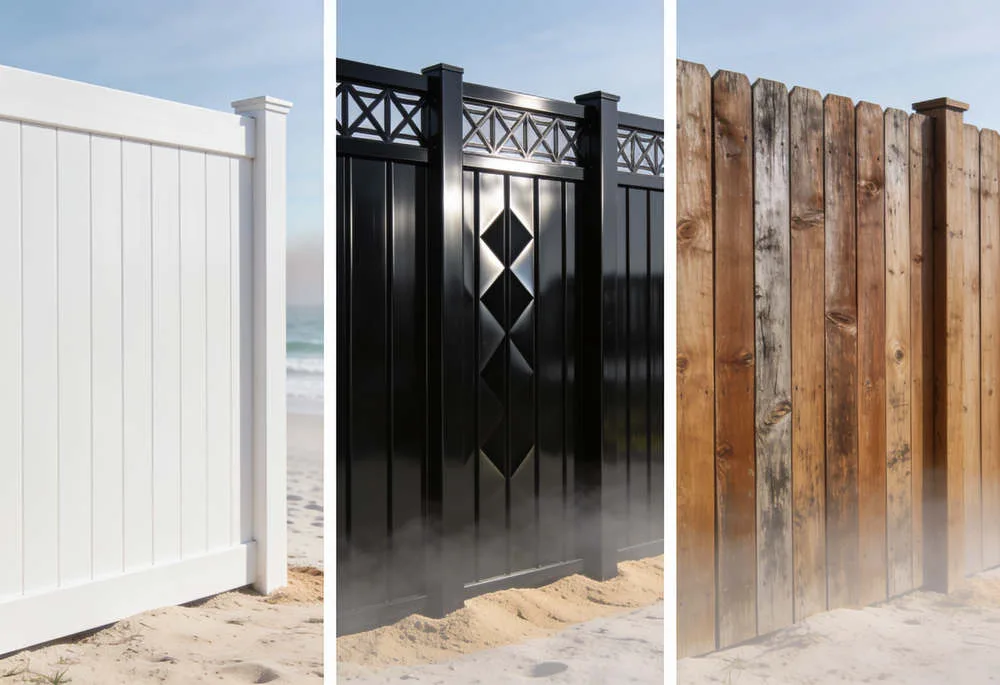
Jacksonville's coastal climate is harder on fences than most homeowners expect. Salt air, intense summer heat, and hurricane-season winds accelerate corrosion, rot, and warping in ways that rarely show up in the manufacturer's brochure. The right material depends on your lot, your HOA rules, and whether privacy or storm resilience is the higher priority. If you want a local opinion before you commit, contact Masters Fence at (904) 510-6540 for a free quote.
Why the Jacksonville environment changes the math
Homeowners in San Marco often assume the same fence that holds up in Atlanta will do fine here. It usually does not. Salt-laden air is corrosive, and Jacksonville sits close enough to the coast that even inland neighborhoods feel the effects. Add months of temperatures above 90 degrees, heavy afternoon storms, and occasional tropical systems, and you have conditions that expose every weakness a material has. The choice between vinyl, aluminum, and wood is less about aesthetics and more about how each material responds to that combination of stressors.
Properties in Riverside with mature tree canopy have some shelter from wind and direct sun, which can extend a wood fence's life considerably. But an exposed lot near the beach, or a backyard that catches the full afternoon sun, changes that calculation. Before picking a material, it helps to think about how much direct exposure the fence will face and how much maintenance time you are willing to put in over the years.
Aluminum: low maintenance and wind-friendly
Powder-coated aluminum is one of the best performers in Jacksonville's climate. It does not rust, does not warp, and the open picket design lets wind pass through rather than pushing against a solid surface. That matters during a storm. Aluminum fences in Ponte Vedra Beach communities have held up through multiple hurricane seasons without the structural failures that solid-panel fences sometimes experience.
The trade-off is privacy. Aluminum is an ornamental material by nature. It suits pool enclosures, property borders, and front yards well, but it will not give you a screened-in backyard. Cost sits in the mid range, and once it is installed and the powder coat is intact, the upkeep is minimal. Inspect the coating periodically and touch up any chips before salt air finds the bare metal underneath.
Vinyl: privacy without the maintenance of wood
Vinyl handles salt air well and requires almost no upkeep beyond an occasional rinse. It does not rot, does not attract termites, and holds its color without painting or staining. For homeowners who want a solid privacy fence and do not want to spend weekends maintaining it, vinyl is often the practical choice in this market.
The concern in hurricane-prone areas is wind load. A solid vinyl privacy panel presents a large surface to the wind. Proper installation with correctly spaced, well-anchored posts reduces that risk significantly, but it is a real consideration on an exposed lot. Vinyl also has a higher upfront cost than wood, though lower lifetime maintenance costs typically close that gap over time.
Wood: the most privacy, the most upkeep
Wood remains popular because it offers the most privacy at the lowest initial cost and suits a wide range of neighborhood aesthetics. The problem is that untreated or improperly treated wood in Jacksonville's humidity and salt air will deteriorate faster than it would in a drier climate. Cedar and pressure-treated pine are the most common choices here. Cedar resists rot and insects naturally. Pressure-treated pine is more affordable but needs sealing and periodic retreatment to hold up.
A wood fence that is installed correctly, with treated posts set in concrete, sealed regularly, and kept clear of soil contact, can last 15 to 20 years. One that is not tends to show rot at the base within five to eight years. The maintenance commitment is real, and it should factor into your total cost calculation alongside the lower purchase price.
Comparing the three on what homeowners actually care about
- Cost. Wood is lowest upfront. Aluminum and vinyl cost more to install but require less spending over time.
- Maintenance. Aluminum and vinyl need very little. Wood needs sealing, occasional repairs, and more attention in a humid coastal environment.
- Privacy. Wood and vinyl provide full privacy. Aluminum does not.
- Wind performance. Aluminum's open design handles wind best. Solid panels in wood or vinyl need strong post installation to manage storm loads.
- Lifespan. All three can last 20 or more years with proper installation and care. Wood requires the most effort to get there.
HOA rules narrow the field first
Before settling on a material, check your HOA's governing documents. Many Jacksonville communities restrict approved materials, colors, and heights. Some allow only white vinyl or black aluminum. Others prohibit chain link but say nothing about wood. Getting that clarity before you purchase anything saves the cost and frustration of a rejected installation. A contractor familiar with HOA requirements in Jacksonville, Palm Coast, and St. Augustine can tell you what committees in your area typically approve.
Getting the right fence for your specific property
There is no single answer that works for every Jacksonville lot. A privacy-first homeowner on an interior lot with some tree cover will probably land on wood or vinyl. Someone on an exposed coastal property with an HOA will likely end up with aluminum. The material that lasts is the one that fits your exposure, your maintenance capacity, and your community's rules. Masters Fence has installed fences across Jacksonville, Palm Coast, and St. Augustine and can recommend the right material after looking at the actual property. Their fence installation process includes handling HOA documentation and permits so the project goes in correctly from the start.
To get a recommendation based on your lot and a free quote, call Masters Fence at (904) 510-6540.