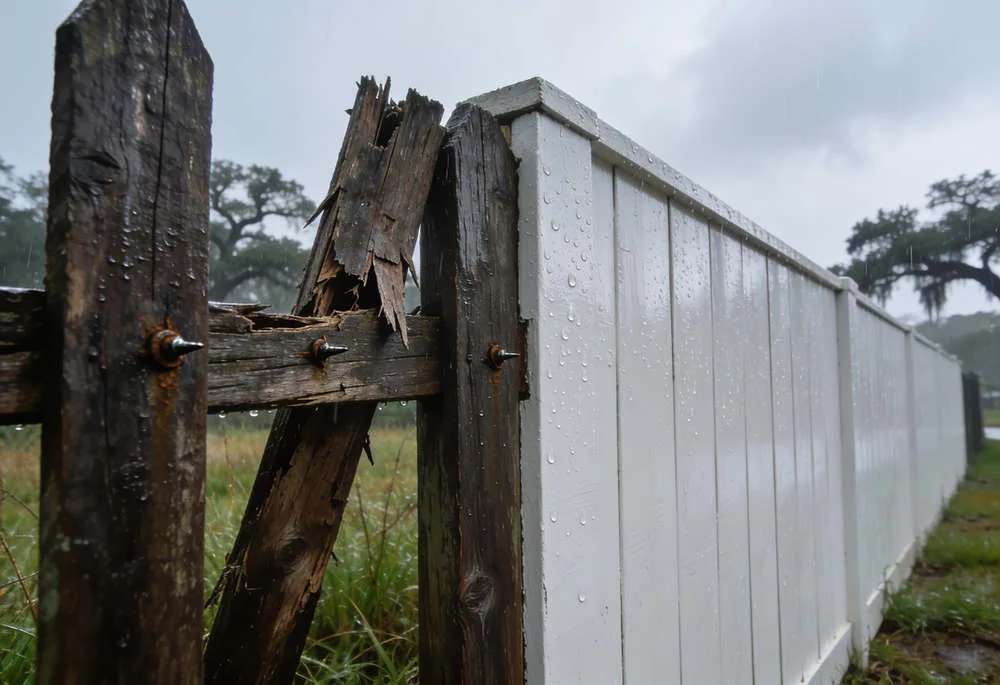
After a storm, a leaning or damaged fence can usually go one of two ways: a straightforward repair gets it back in shape, or the damage is widespread enough that replacement is the smarter long-term spend. In most cases, isolated post failure or a run of broken pickets points toward repair. Widespread rot, multiple failed posts, or a fence that has already been patched more than once points toward replacement. If you are not sure which category your fence falls into, call Masters Fence at (904) 510-6540 for a fast on-site assessment before hurricane season arrives.
Why St. Augustine's climate is especially hard on fences
St. Augustine sits in one of the saltiest, most humid environments in Florida. Salt air off the coast accelerates corrosion in metal hardware and eats into wood that is not properly sealed. Homeowners near the Historic Downtown and Castillo de San Marcos area see this play out in fence posts that look solid from the outside but have rotted through at the base, right at the soil line where moisture collects. That concealed rot is the most common reason a fence leans after a storm: it was not really the wind that knocked it over, it was years of hidden deterioration finally giving way under pressure.
The problem compounds on Anastasia Island and other low-lying areas where standing water after heavy rain keeps soil saturated around the base of posts. Wood posts in constant contact with wet, salt-laden soil can fail in as few as five years without proper treatment and concrete footings. Posts installed without adequate depth or anchoring give way even faster. A fence that leans repeatedly after storms is almost always telling you the post foundation is compromised, not just the visible structure above ground.
Lincolnville homeowners with older wood fences often discover a similar pattern: the pickets and rails look manageable, but two or three posts have rotted through at grade level, and once you pull one, the adjacent ones are not far behind. At that point, repairing post by post tends to cost nearly as much as a section replacement, without the benefit of uniform new footings across the run.
When repair is the right call
Not every storm-damaged fence needs to be replaced. Repair makes sense when the damage is contained and the underlying structure is sound. Specifically, a fence is a good candidate for repair when:
- One or two posts have heaved or shifted but show no rot at the base.
- A section of pickets is broken or missing but the rails and posts are intact.
- A rail has pulled away from a post due to wind load but the post is still solid.
- Hardware, such as hinges or gate latches, has corroded or failed but the surrounding structure is fine.
In these situations, fence repair is faster and more cost-effective than full replacement. Resetting a post in fresh concrete, replacing a rail, or swapping out a damaged section is a half-day job in most cases. The key is catching it before the problem spreads.
When replacement makes more sense
Replacement becomes the better investment when repair costs start approaching the price of new materials, or when the root cause of the damage will not be fixed by patching the surface. The clearest signals that replacement is the right direction:
- Multiple posts are rotted at grade level across a long run of fence.
- The fence has been repaired after previous storms and keeps failing in the same spots.
- The wood is gray, soft, and splintering throughout, not just in one section.
- The posts were never set in concrete, or were set too shallow for the soil conditions.
A fence with compromised footings will lean again after the next storm regardless of how well the above-ground repairs are done. Replacement with properly set posts in concrete, at the correct depth for your lot, solves the problem rather than deferring it.
The post footing problem most homeowners miss
The single biggest reason St. Augustine fences fail repeatedly is inadequate post installation. Posts set without concrete, or set too shallow, shift in the sandy, moisture-rich soil common throughout St. Johns County. When wind load hits a panel, the posts rock rather than holding firm, and the rails and pickets take the stress. Over time the connections loosen, and a moderate storm becomes enough to push the whole section over.
Proper installation means posts set in concrete to a depth that accounts for the height of the fence and the local soil conditions. It also means using the right post material for the environment: pressure-treated wood, aluminum, or vinyl, depending on what the rest of the fence calls for and what the HOA permits. Getting the footings right the first time is what separates a fence that lasts 20 years from one that leans every hurricane season.
Getting an assessment before the next storm
Masters Fence serves homeowners throughout St. Augustine, Jacksonville, and Palm Coast. Their crews assess storm-damaged fences regularly and can tell you quickly whether a targeted fence repair addresses the actual problem or whether the post foundation has deteriorated to the point where replacement is the smarter path. Getting that assessment done now, before hurricane season, means you are not scrambling for a contractor after the next major storm when everyone else is too.
To schedule a repair-or-replace assessment, call Masters Fence at (904) 510-6540.