Jacksonville homeowners with large properties face a unique challenge when securing their perimeters without blocking the view. Choosing the right types of split rail fence Jacksonville properties need comes down to balancing classic looks with our humid Florida climate. Whether you manage an equestrian estate near Mandarin or a spacious lot near the St. Johns River, you have plenty of durable options.
Need help planning your project? Contact Masters Fence at (904) 510-6540 today.
What Are the Main Types of Split Rail Fence?
The main types of split rail fence Jacksonville residents choose include classic two-rail, three-rail, and four-rail configurations. You can build these structures using natural woods like cedar and pine, or opt for modern vinyl materials. Your choice dictates the fence's height, animal containment ability, and long-term maintenance needs.
Split rail fences offer a timeless, rustic aesthetic that complements large yards and rural properties perfectly. When you schedule a professional fence installation, the crew will set sturdy posts deep into the sandy Florida soil. They then slide the horizontal rails into precut holes in the posts. This creates a secure boundary that still lets the coastal breeze blow right through your yard.
Which Materials Last Longest in Florida Weather?
Modern vinyl split rail fences last 20 to 30 years in Florida weather with virtually no maintenance. Natural wood options like cedar and pine typically last 10 to 15 years, provided you seal them every two years to prevent moisture damage and rot from our high humidity.
Based on the thousands of installations our team completes across Florida, we constantly see how humidity affects different materials. Wood fences give you that beautiful, traditional look, but they require serious upkeep.
Let us look at a quick comparison between a traditional rough-hewn cedar fence and a modern vinyl alternative.
Cedar naturally resists insects and decay. A cedar split rail fence looks incredibly charming on a large equestrian property. However, the relentless Florida sun and frequent afternoon rainstorms will eventually weather the wood to a silver-gray color. If you skip your biannual sealing routine, the wood will start to warp.
Vinyl split rail fencing solves almost all of these environmental problems. A vinyl fence costs more upfront, but it resists the rot, mold, and termite damage that destroys wood fences. You never have to paint or stain it. A simple wash with a garden hose once every six months keeps it looking brand new.
Traditional Wood Fencing Options
If you prefer the authentic look of real timber, you have several great choices. Each wood species brings different benefits to your property.
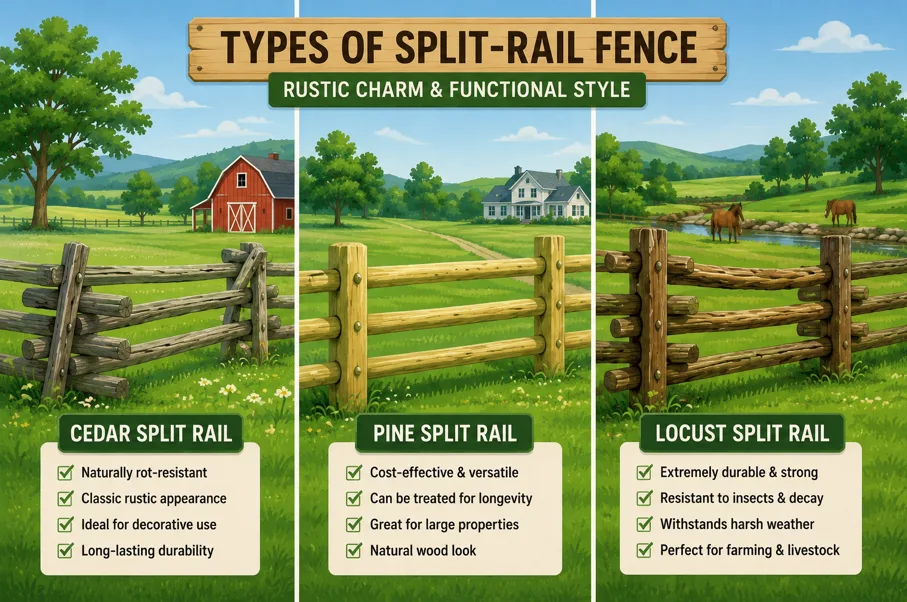
Cedar is the aromatic and resilient option. It contains natural oils that deter pests. This makes it a popular choice for homeowners who want longevity without immediately resorting to harsh chemical treatments.
Pine is your economical and versatile choice. It costs less than cedar, making it highly attractive for securing large acres of land. Contractors pressure-treat pine to help it survive our wet climate. If a storm damages a section, finding matching pine for a quick fence repair is fast and inexpensive.
Oak and locust provide incredibly sturdy alternatives. Locust wood is naturally durable and incredibly hard. It stands up to heavy livestock leaning against the rails. These dense woods cost more and weigh significantly more, but they offer fantastic structural stability.
Exploring Different Styles and Configurations
You can customize the layout of your fence to match your specific needs. The number of rails you choose completely changes the function of the structure.
Two-rail fences offer classic simplicity. They stand about three to four feet tall. This style works beautifully as a decorative boundary line that defines your property edge without obstructing your view of the neighborhood.
Three-rail fences provide enhanced containment. Standing slightly taller, this is the standard choice for keeping larger pets and livestock safely contained. It provides a more substantial visual barrier while maintaining that open, airy feel.
Four-rail fences maximize security and visual impact. These structures create a formidable barrier for horses and cattle. The tight spacing between the rails makes it much harder for animals to slip through or reach over.
Cross-buck designs add architectural interest. Instead of standard horizontal rails, the wood crosses in an “X” pattern between the posts. This style looks exceptionally striking on farm properties and adds immediate curb appeal.
How Much Does Split Rail Fencing Cost?
A standard split rail fence costs between $15 and $30 per linear foot installed. Pine is your most economical option at the lower end of that range. Vinyl systems require a higher upfront investment of $25 to $40 per linear foot, but they eliminate future staining costs.
When evaluating the types of split rail fence Jacksonville contractors offer, always factor in the long-term maintenance budget. Spending an extra 20% on vinyl materials during the initial build can reduce your 10-year maintenance expenses by up to 90%. You save money by never buying wood sealer, stain, or replacement rails for rotted sections.
Enhancements and Customizations
A basic post and rail setup is just the beginning. You can easily upgrade your fence to make it more functional for your family.
Wire mesh additions boost security for pets. By attaching a coated wire mesh to the inside of the rails, you keep small dogs safely inside your yard while keeping wild critters out. The mesh is virtually invisible from a distance.
Functional gates add rustic flair to your entryways. You can install a massive double gate for driveway access or a charming single gate for walking paths.
Securing Your Jacksonville Property
A split rail fence is a beautiful addition to any large property. By understanding the types of split rail fence Jacksonville suppliers carry, you can make a smart investment that protects your home for decades. Whether you live in a historic San Marco home or own acres out in the countryside, the right materials make all the difference.
If you are ready to upgrade your property boundaries, we are here to help you plan the perfect layout. Contact Masters Fence at (904) 510-6540 today, or visit the Masters Fence website to explore your options and request a free estimate.