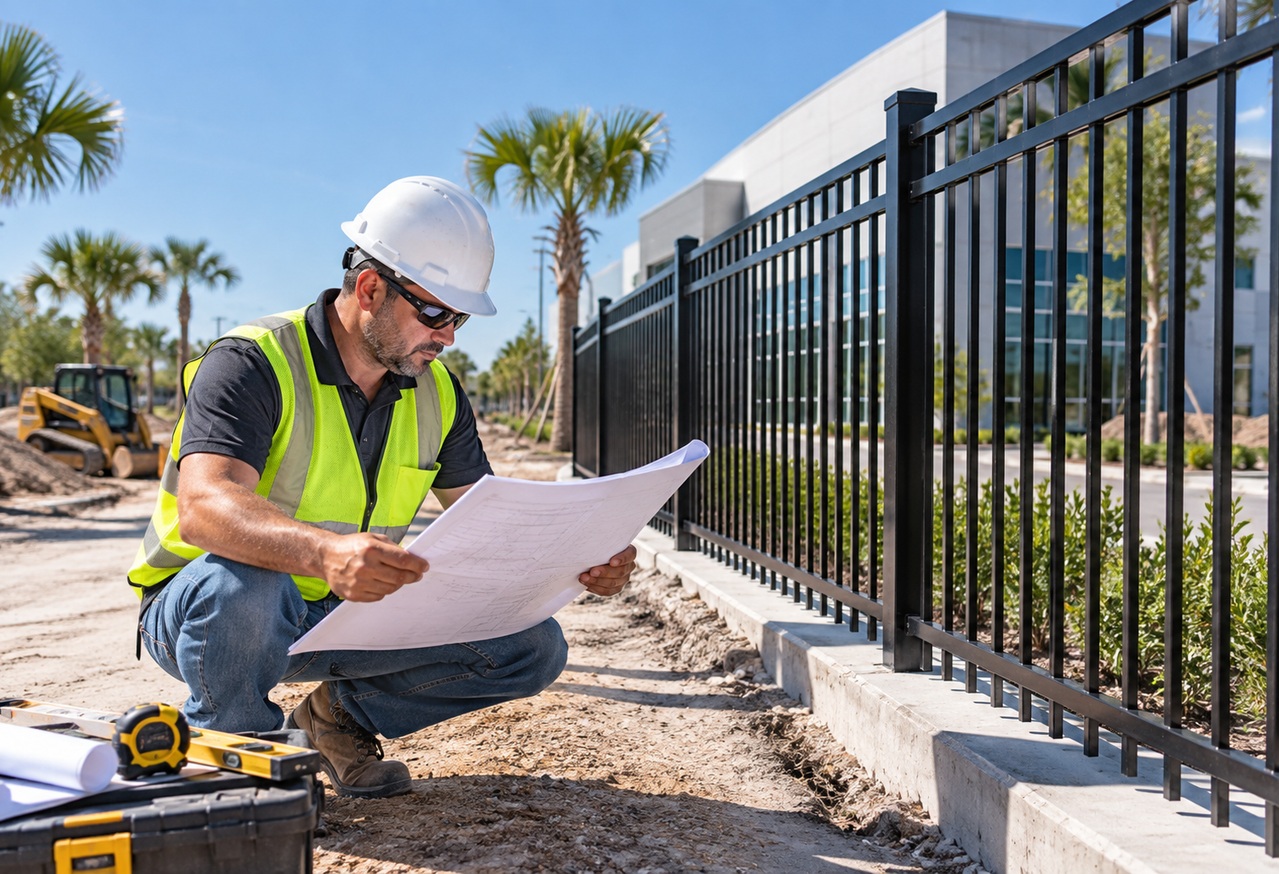
Budget for commercial fencing by starting with four things: total linear footage, the material and height your security and local code require, the number and type of gates, and the permits your site needs. In St. Augustine, whether the property sits in a historic district can change the design and the timeline more than anything else on that list.
A commercial fence is a long-term investment, and planning it right the first time avoids change orders and delays. At Masters Fence, we quote commercial projects across Northeast Florida and help owners plan phases that fit their opening dates. If you're fencing a new site, contact our team for a site quote at (904) 510-6540.
How do you choose commercial fencing material and height for security and code?
Match the material to what you're protecting and where the property sits. Chain link is the value choice for storage and industrial yards, aluminum and ornamental steel suit customer facing sites, and vinyl works where privacy matters.
A contractor's yard or equipment lot along State Road 16 or US 1 usually needs a tall chain link fence, sometimes with privacy slats, and it may need extra security features that require separate approval. A restaurant, medical office, or retail center facing customers often calls for black aluminum, which looks clean and holds up to salt air better than steel. Vinyl privacy fencing is common for screening dumpsters, mechanical equipment, and the boundary with a residential neighbor.
Height is set by both security needs and local code. Zoning often limits heights near the front of a lot or along the street, and pool enclosures at hotels or apartments must meet Florida's barrier requirements. Our fence installation quotes spell out material, height, post spacing, and footing depth for each run, so you can compare options clearly.
What gate and access planning does a commercial site need?
Plan gates around how people and vehicles actually move: staff, customers, deliveries, and emergency services. Gates are often the most expensive single part of a commercial fence, so they deserve early attention.
Delivery trucks need wide openings and room to turn. For vehicle gates on sandy Florida soil, a cantilever slide gate that rolls without a ground track often outlasts a swing gate. Staff entrances may need a separate pedestrian gate with a keypad or card reader tied to your access control system. Fire rescue will usually need a way through locked gates, often through a lock box or an override on automatic gates, so check with the local fire marshal early.
Think about hours as well. A business that receives early morning deliveries before staff arrive may want a gate the driver can open with a code. Walk your site with your contractor and mark every point where something has to get in or out.
What permits and historic district rules apply in St. Augustine?
Most commercial fences need a building permit. Inside St. Augustine's historic districts, you'll also need design approval before work can start, which can limit materials, height, and style.
The City of St. Augustine reviews changes in its historic preservation districts through the Historic Architectural Review Board, which issues certificates of appropriateness. Fences that face the street get a close look. Chain link along a historic street frontage is often discouraged, while wood picket, masonry, or ornamental metal that fits the character of the area is more likely to pass. Properties outside city limits in unincorporated St. Johns County follow county permitting instead.
We worked with a business owner in St. Augustine who wanted a standard perimeter fence around his property. He didn't realize his new site was in a historic district, so extra approvals were required and his design options were somewhat limited. Knowing that before you budget saves you from redesigning after the quote.
How do site size and terrain shape the timeline and price?
Longer runs, uneven ground, wet soil, and clearing all add time and cost. A flat, cleared lot goes quickly, while a wooded or low lying site needs more prep work before posts can go in.
Price follows linear footage first, then material and gates. Terrain changes the labor. Near the Matanzas River and the marshes around St. Augustine, the ground can be soft and wet, which may call for deeper footings. Sloped or wooded sites need clearing and stepped or racked panels. Utility locates, surveys that confirm property lines, and wetland setbacks can all affect where the fence goes.
Large sites often work best in phases: secure the perimeter first, then add gates, decorative frontage, and dumpster enclosures as construction wraps up. If you're planning commercial fencing for a new St. Augustine property, call (904) 510-6540 or request a commercial site quote. We'll walk the property and give you a clear, itemized plan.