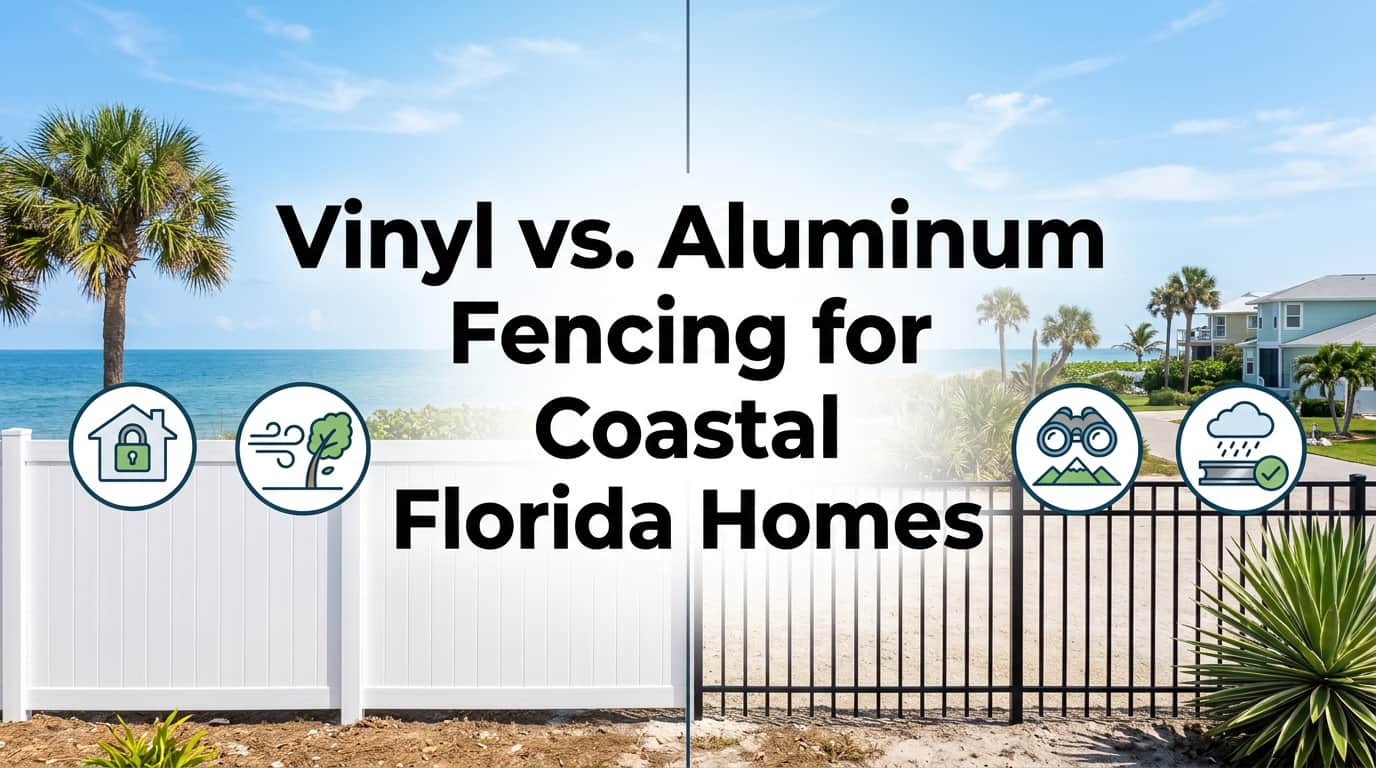
Coastal living near Jacksonville's Ponte Vedra Beach or the Atlantic Beach corridor is beautiful, but it's hard on fences. Salt air, relentless humidity, and hurricane-season winds don't give fencing materials much of a break. Before you commit to a material, it's worth knowing exactly how each one holds up against Florida's coastal conditions.
Choosing the wrong fence can cost you far more than the installation price. Replacements, frequent repairs, and storm damage add up fast. Ready to make the right call the first time? Call Masters Fence at (904) 510-6540 for a free estimate.
Why Does Coastal Florida Fencing Fail So Quickly?
Coastal fencing fails faster than inland fencing because of three factors working together: salt-laden air, high humidity, and wind pressure from tropical storms. Jacksonville sits along a coastline that sees sustained hurricane-season winds from June through November. Neighborhoods like Neptune Beach and the Intracoastal areas near the Isle of Palms get consistent salt spray that accelerates material breakdown. Most fences placed within a mile of the ocean face significantly more wear than those just a few miles inland, regardless of material.
Is Vinyl Fencing a Good Fit for Florida's Coast?
Vinyl fencing handles coastal Florida conditions better than most homeowners expect. PVC resists warping, cracking, and rot even when salt air and moisture hit it daily. Unlike wood, it won't absorb water and swell. Unlike untreated metal, it won't rust. Most vinyl panels carry a lifetime manufacturer's warranty, which tells you something about how durable the material really is.
Heat resistance matters here too. Jacksonville summers regularly push past 95°F, and fencing that sits in direct sun all day needs to handle thermal expansion without cracking. Quality vinyl does exactly that.
On the maintenance side, vinyl is about as low-effort as fencing gets. A garden hose and mild soap handle most cleaning jobs. There's no painting, staining, or annual sealing required. For homeowners who want a clean, private fence without the upkeep, vinyl is a practical choice.
One limitation worth knowing: vinyl doesn't perform as well as aluminum in extreme wind events. In high-wind zones, especially near the coast, solid vinyl panels can act like a sail and take on more wind load than a more open-style fence.
Does Aluminum Hold Up Better Against Salt and Wind?
Powder-coated aluminum fences hold up exceptionally well in coastal conditions, and here's why. The powder-coating process creates a sealed barrier over the metal that blocks moisture and salt from reaching the base material. Aluminum also doesn't rust the way steel or wrought iron would, making it a far more practical metal option for Jacksonville coastal properties.
The open-style picket design that most aluminum fences use actually works in their favor during storms. Wind passes through the gaps rather than pushing against a solid surface. That structural advantage makes aluminum a strong choice for properties close to the water, where storm pressure is highest.
Aesthetically, powder-coated aluminum gives you a clean, modern look that complements properties along scenic stretches like the St. Johns River waterfront. It's a fence that tends to add genuine curb appeal without requiring much to maintain.
That said, aluminum fences offer less privacy than vinyl panels. If privacy is a priority, vinyl is the better fit. Aluminum is better suited for boundary definition, pool enclosures, and decorative perimeter fencing.
How Does Salt Spray Actually Damage Fencing Materials Over Time?
Salt spray causes damage through a process called corrosion, where chloride ions break down metal bonds and accelerate oxidation. For untreated metals, this can begin within a year near the coast. Powder-coated aluminum resists this because the coating seals the metal completely. If the coating chips or scratches, touch-up paint can restore the barrier quickly.
PVC vinyl isn't affected by salt corrosion at all because it's not a metal. Salt air doesn't chemically react with the material. The main risk for vinyl near the coast is UV degradation over many years, which can cause fading and slight brittleness. Choosing a UV-stabilized vinyl product addresses this directly.
We've seen homeowners near Atlantic Beach install standard painted steel fencing and need full fence repair within three to four years due to rust damage. Switching to either vinyl or powder-coated aluminum eliminates that cycle entirely.
What Does Fencing Cost in Jacksonville's Coastal Areas?
Here's a straightforward cost comparison for coastal Jacksonville homeowners:
Vinyl fencing typically runs $25 to $40 per linear foot installed, depending on panel style and height. A standard 150-foot residential installation comes out to roughly $3,750 to $6,000. Privacy panels on the higher end of that range are common in coastal subdivisions.
Aluminum fencing typically runs $30 to $50 per linear foot installed, putting a 150-foot project at approximately $4,500 to $7,500. Decorative styles and taller panels push costs toward the higher end.
Both materials cost more upfront than wood, but they save money over time. Wood fencing in coastal conditions may need replacement or significant fence repair every 5 to 7 years, while vinyl and aluminum regularly last 20 to 30 years with minimal intervention. Fence repair in Jacksonville, Florida is also a recurring cost for wood and uncoated metals that simply doesn't apply to these two materials in the same way.
What Do Local Fencing Codes Require in Coastal Jacksonville Counties?
Duval County follows the Florida Building Code, which has specific requirements for fence height, setback distances, and wind-load ratings in coastal high-hazard areas. If your property sits in a designated wind zone, your fence installation may need to meet higher structural standards.
Here's what matters most for coastal homeowners:
- Permit requirements: Most fence installations in Jacksonville require a permit. Duval County typically charges $50 to $150 for a standard fence permit.
- Height limits: Residential fences are generally capped at 6 feet in rear yards and 4 feet in front yards, though setback and HOA rules vary by neighborhood.
- Wind-load compliance: Coastal zone properties may require engineering documentation for fence installations above a certain height.
Working with experienced fencing contractors who know local code requirements saves time and prevents costly corrections after installation. Masters Fence handles the permitting process for Jacksonville homeowners, so you don't have to figure that out on your own.
Which Fencing Material Is Right for Your Coastal Jacksonville Home?
The right choice comes down to what you need most.
Choose vinyl if:
- Privacy is your primary concern
- You want the lowest possible maintenance commitment
- Your property isn't in an extreme high-wind zone
- Budget is a factor and you want lifetime warranty coverage
Choose aluminum if:
- Wind resistance is your top priority
- You want a decorative fence for a pool, garden, or property boundary
- Curb appeal and a modern aesthetic matter to you
- You're in a direct coastal zone with consistent salt spray
Both materials handle coastal Florida conditions far better than wood or uncoated metal. And when fence repair in Jacksonville, Florida is needed down the road, both materials are straightforward to service without full replacement.
For properties within a mile of the coast, powder-coated aluminum's combination of rust resistance, wind performance, and clean aesthetic often makes it the stronger long-term investment. For properties slightly further inland where privacy is the goal, vinyl's solid panels and lifetime warranty are tough to beat.
Get a Free Estimate from Masters Fence Today
Masters Fence serves Jacksonville, St. Augustine, Palm Coast, and the surrounding coastal communities. Our team knows what fencing materials hold up here, and we'll walk you through the right choice for your specific property and budget.
Call us at (904) 510-6540 or visit our fence installation page to request your free estimate. If your current fence took a hit and you need fence repair before a bigger replacement project, we handle that too.
Quality fencing starts with the right material. Let's make sure yours lasts.