Your fence is leaning after last week's storm. Or maybe the wood has gone gray and soft, and a section near the gate wobbles when you touch it. St. Augustine's heat, humidity, and salt air are relentless on outdoor structures, and sooner or later, every homeowner faces the same question: fix it, or replace the whole thing?
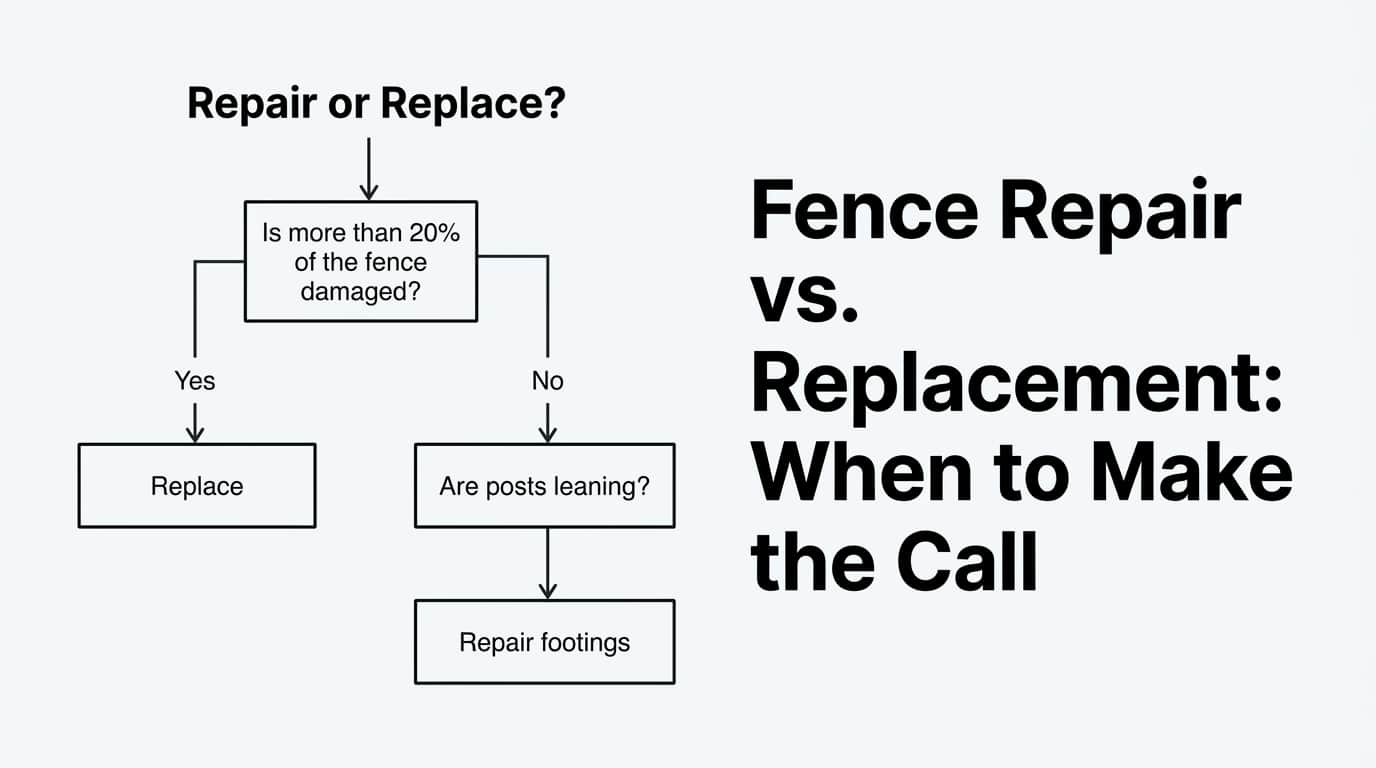
The short answer: repair it if the damage is isolated and structural posts are sound. Replace it if rot, warping, or damage has spread across more than 20% of the fence. The sections below break that down in detail so you can make a confident call before spending a dollar.
Need a professional opinion right now? Call Masters Fence at (904) 510-6540 for a free estimate.
What Are the Signs You Can Repair Instead of Replace?
You can typically repair a fence when the damage is limited to one or two isolated areas and the main posts are still solid. Here's what that looks like in practice:
- Loose or cracked boards: A single warped picket or a board that's pulled away from the rail is an easy fix. Replacement boards for a standard 6-foot privacy fence run $3–$8 per picket at most lumber yards.
- Green or black algae buildup: St. Augustine's humidity creates the perfect conditions for algae and mildew to grow on wood and vinyl. A good cleaning with a diluted bleach solution (1 cup bleach to 1 gallon of water) can make a weathered fence look new again at almost zero cost.
- A single damaged post: Replacing one post typically costs $150–$300 in materials and labor. If only one post is rotting at the base, you don't need to tear out the entire run.
- Minor gate alignment issues: Gates sag over time. In many cases, adjusting the hinges or adding a tension cable to the corner of the gate frame solves the problem without replacing any fencing.
Our crews handle fence repair calls across St. Johns County regularly, and a large number of them turn out to be straightforward fixes that take less than a half day. Don't assume the worst until you've had a professional look at the posts.
When Does Damage Cross the Line Into Full Replacement?
Full replacement makes more sense than repair when structural failure is widespread. A good rule of thumb: if more than 20% of your fence needs attention, the cost of patching it section by section will likely exceed the cost of a new fence installation within two to three years.
Watch for these red flags:
- Widespread rot in wood posts or rails: When rot has moved from the boards into the posts, the fence has lost its structural backbone. Pressing a screwdriver into a post and having it sink easily means the wood is compromised.
- Multiple leaning sections: One leaning panel is a post problem. Three or four leaning sections mean the fence line itself is failing, often due to ground movement or long-term moisture damage.
- Storm or impact damage exceeding one run: After a hurricane or major wind event, a fence that's down across 30 or 40 feet is almost always more economical to replace than to piece together.
- Consistent corrosion on older metal components: Rust that has spread across rails, post caps, or chain link fabric signals the fence is near the end of its useful life.
A homeowner near the Vilano Beach area recently called us after a storm took out a 60-foot section of her wood privacy fence. The remaining sections had soft posts and warped rails throughout. Rather than patching, she got a full replacement in pressure-treated pine for around $2,800, and the new fence will easily last 15–20 years with basic maintenance.
How Does Florida's Climate Affect Different Fence Materials?
St. Augustine's weather doesn't treat all materials equally. Understanding how each one holds up here helps you plan repairs and set realistic replacement timelines.
Pressure-Treated Wood
Wood is popular in neighborhoods like Lincolnville and Davis Shores for its classic look, but St. Augustine's salt air and humidity accelerate decay. Expect a lifespan of 10–15 years for treated pine when properly maintained. Annual sealing or staining extends that significantly. Posts set directly in the ground are the first to fail, typically showing rot within 7–10 years in high-moisture yards.
Vinyl
Vinyl holds up well against humidity and doesn't rot, which makes it a strong choice for coastal Northeast Florida properties. UV exposure is the bigger enemy here. Over 10–15 years, prolonged Florida sun can cause discoloration and brittleness, particularly on older, lower-grade vinyl. Cracks and broken caps are usually repairable without replacing entire panels.
Aluminum
Aluminum resists rust and handles salt air better than steel or iron. Near the coast, it's often the smartest long-term investment. Well-maintained aluminum fences can last 30 years or more. Repair needs are usually cosmetic, like replacing a bent picket or repainting, rather than structural.
For any of these materials, St. Augustine's wind load requirements matter during installation. Florida Building Code requires fencing in coastal areas to meet specific wind resistance standards. Before committing to either a repair or a replacement, verify that your fence, old or new, meets current local code requirements. A licensed fence contractor can confirm this during an estimate.
Repair vs. Replacement: What Do the Numbers Actually Look Like?
Here's a straightforward side-by-side for a typical 100-linear-foot privacy fence in the St. Augustine area:
The numbers tell the story clearly. If you're spending $400–$600 in repairs every two years on an aging fence, a new installation pays for itself in less than a decade while giving you a warranty, better curb appeal, and fewer headaches.
What Do Local Fence Experts in St. Augustine Recommend?
The fence companies in St. Augustine, Florida that operate here long-term will tell you the same thing: don't patch what you can't save. We've seen homeowners in the historic district spend $800 over three seasons fixing a wood fence that ultimately needed full replacement anyway. That's money that would've been better applied toward a new installation.
A few practical tips from our experience working across St. Johns County:
- Get a written assessment before committing. A reputable fence company in St. Augustine, Florida will inspect your posts, rails, and hardware and give you an honest breakdown of repair versus replacement costs.
- Check for permits before you replace. St. Johns County requires permits for fence replacement projects. Permit fees typically run $50–$150 depending on the scope of work, and skipping this step can create issues when you sell.
- Ask about wind load ratings. With hurricane season running June through November, any new fence installation in coastal Northeast Florida should meet Florida Building Code wind resistance requirements for this region.
- Factor in HOA rules. Many communities near World Golf Village and Ponte Vedra have strict rules on fence height, materials, and color. Confirm approval before signing a contract.
Working with experienced fence companies in St. Augustine, Florida means you get someone who knows these local requirements upfront and won't leave you dealing with a permit problem after the job is done.
Making the Smart Call for Your Property
Deciding between repair and replacement doesn't have to be a stressful guessing game. Start with a close look at your posts, check for rot, count how many sections are visibly damaged, and get a professional opinion before committing to either path.
As a general guide: repair when damage is isolated and posts are solid, replace when deterioration has spread past 20% of the fence or structural failure is present. Either way, acting sooner rather than later protects your property value and prevents small problems from becoming expensive ones.
Masters Fence serves homeowners across St. Augustine and the surrounding areas with free estimates and honest advice. Call us at (904) 510-6540 to schedule a time for one of our fence experts to take a look.